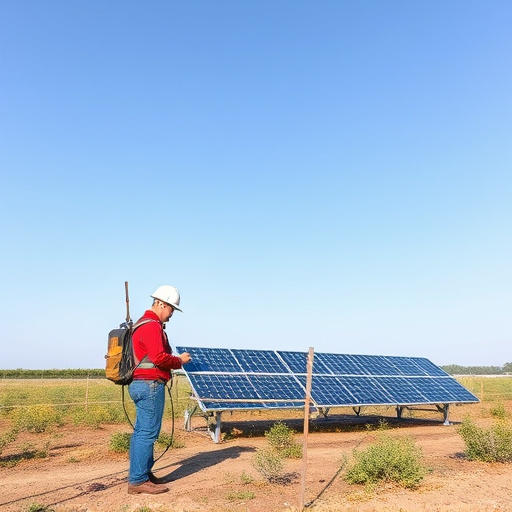
Perovskite solar cells are an emerging technology that offers improved efficiency and cost-effectiveness over traditional silicon-based solar panels. They utilize organic compounds for their construction, which are less expensive to produce, thus enhancing the economic viability of solar energy. These cells have a broad light absorption spectrum and are scalable, making them suitable for both large-scale power systems and portable electronics. Their potential in increasing conversion efficiencies and adaptability positions them as leading candidates to surpass silicon cells. Research is ongoing to improve their stability and durability to ensure they can perform reliably under various environmental conditions. As progress is made, perovskite solar cells stand to revolutionize the renewable energy sector by making sustainable solar power more accessible and affordable, potentially becoming a cornerstone innovation in solar power technology.
Bifacial solar panels are transforming the solar industry with their ability to capture sunlight from both sides, significantly boosting energy output compared to traditional single-faced panels. They are particularly effective in environments with high albedo, such as snow or reflective terrains, and can efficiently generate power under a wide range of lighting conditions, including diffuse light. Their higher efficiency and lower land and cost implications make them an attractive option for large-scale solar projects, utility-scale photovoltaic systems, and even for integration into building facades. As the world increasingly embraces renewable energy, bifacial solar panels are expected to be a key component in meeting our clean energy needs.
Floating solar farms represent an innovative approach to solar power generation, offering both energy production and environmental benefits by being installed over bodies of water. These systems leverage the high efficiency of solar irradiance on water while avoiding issues like land use and ecological disruption. They are designed to maximize energy yield by using water's reflective properties and have addressed challenges such as saltwater corrosion, ensuring long-term durability. Integrated with smart grid technology, floating solar farms promise to be a sustainable and effective energy solution, conserving land and delivering high-quality renewable power.
Breakthroughs in transparent solar technology are paving the way for solar cells to be seamlessly integrated into buildings and devices without compromising aesthetics or functionality. This innovation allows windows, skylights, and screens—including those on smartphones—to become sources of clean energy. The technology's potential for wide-scale application across various surfaces, such as vehicles and apparel, indicates its growing practicality and adaptability in powering our lives with clean, efficient solar power. As transparent solar cells continue to advance, they are set to transform how we consume and interact with energy, making sustainable solar power a seamless part of modern life. Solar Power remains at the forefront of this technological revolution, offering promising solutions for a more sustainable future.
2023 heralds a new dawn in solar power innovation, with groundbreaking advancements poised to redefine our harnessing of renewable energy. This article spotlights seven pivotal innovations that are transforming the landscape of solar technology. From the efficiency and cost-saving potential of revolutionary Perovskite Solar Cells to the dual-sided energy generation of Bifacial Solar Panels, these developments are set to enhance our collective capacity for sustainable power production. Additionally, the deployment of Floating Solar Farms on bodies of water is a testament to space optimization and conservation efforts. Transparent Solar Technology promises to maintain aesthetics while generating electricity, and Building-Integrated Photovoltaics (BIPV) are paving the way for seamless integration into architecture. Innovations in durability ensure that solar panels can withstand harsh environmental conditions, and next-generation solar inverters promise smarter energy management through advanced systems. These strides in solar power technology underscore a commitment to a greener future.
- Revolutionary Perovskite Solar Cells: A Leap Towards Efficiency and Cost-Effectiveness
- Bifacial Solar Panels: Harnessing Both Sides for Maximized Energy Generation
- Floating Solar Farms: The Buoyant Solution to Space and Water Conservation
- Transparent Solar Technology: Merging Windows with Power without Compromising Aesthetics
Revolutionary Perovskite Solar Cells: A Leap Towards Efficiency and Cost-Effectiveness

Perovskite solar cells have emerged as a groundbreaking innovation in the realm of solar power, promising a significant leap forward in both efficiency and cost-effectiveness. Unlike traditional silicon-based solar panels, perovskite cells are composed of organic materials that can be synthesized at a fraction of the cost, potentially reducing the overall expense of solar energy generation. These cells exhibit remarkable absorption capabilities across a broad spectrum of light, which coupled with their scalability, positions them as strong contenders to surpass the performance of conventional solar panels. The integration of perovskite materials into existing solar power technology not only enhances energy conversion efficiencies but also expands the scope for versatile applications, from large-scale photovoltaic systems to portable electronics. As research continues to advance, perovskite solar cells are poised to transform the landscape of renewable energy, making sustainable solar power more accessible and affordable for global deployment. The focus on improving stability and longevity is crucial as these new solar cells move closer to widespread commercial adoption, ensuring they can withstand environmental factors and maintain high performance over time. With each breakthrough, perovskite solar cells solidify their position as a pivotal innovation in the evolution of solar power technology.
Bifacial Solar Panels: Harnessing Both Sides for Maximized Energy Generation

Bifacial solar panels represent a significant leap forward in solar power technology, offering a dual-sided design that captures sunlight from both sides, thereby increasing energy generation potential. Traditional single-faced solar panels absorb photons from only one side, but bifacial models harness the sun’s rays on the front and back, maximizing their efficiency, especially when installed on reflective surfaces or tilted angles to catch ambient light. This innovation significantly enhances the total energy yield, particularly in environments where albedo effects are significant, such as snow-covered or highly reflective surfaces. The added advantage of bifacial solar panels is not just in their ability to generate more power under optimal conditions but also their improved performance during cloudy or diffuse light scenarios, making them versatile and effective across a range of environments. As the global demand for renewable energy sources continues to surge, bifacial solar technology stands out as a game-changer, promising to boost the capacity and efficiency of solar installations worldwide.
Incorporating bifacial solar panels into large-scale solar power projects can lead to substantial gains in energy output without necessitating a proportional increase in land use or infrastructure. This not only optimizes space but also reduces the overall cost per watt generated. The technology is particularly advantageous when deployed on utility-scale photovoltaic (PV) systems, agricultural lands, and even integrated into building facades. As solar power technology continues to evolve, bifacial panels are set to play a pivotal role in the future of renewable energy, offering an innovative solution that aligns with the growing need for sustainable, efficient, and high-yield solar power generation systems.
Floating Solar Farms: The Buoyant Solution to Space and Water Conservation

Floating solar farms represent a pioneering approach in harnessing solar power, addressing both the pressing need for additional energy capacity and the conservation of terrestrial space and water resources. These innovations transform bodies of water into productive platforms, with photovoltaic panels buoyantly installed on or above the water’s surface. This method not only maximizes the efficiency of solar irradiance by minimizing reflection loss but also prevents the evaporation of water and reduces shading effects that can occur in traditional ground-based installations. The reflective nature of water, when utilized effectively, can actually enhance the performance of these floating arrays, leading to increased energy output. Furthermore, the deployment of floating solar farms is less disruptive to ecosystems compared to land-based projects, as they can coexist with aquatic life without significant impact. This dual benefit of conserving land and optimizing energy production positions floating solar farms as a key innovation in the evolution of solar power technology.
Advancements in materials and design have led to the development of specialized solar panels that are resistant to saltwater corrosion, ensuring the longevity and safety of floating installations. The engineering challenges of anchoring, mooring, and maintenance have been met with innovative solutions such as adaptive buoyancy systems, which allow for adjustments based on weather conditions and water levels. This agility in response to environmental factors is crucial for maintaining optimal energy generation throughout the year. Additionally, the integration of these systems with smart grid technology enables better monitoring and management of the power generated, further enhancing their efficiency and reliability. As a result, floating solar farms are becoming an increasingly viable solution for sustainable energy production, offering a promising outlook for the future of solar power.
Transparent Solar Technology: Merging Windows with Power without Compromising Aesthetics

In recent years, transparent solar technology has emerged as a game-changing innovation in the realm of renewable energy. This advancement represents a significant leap forward in sustainable power generation by integrating photovoltaic cells into glass substrates, allowing for the harnessing of solar power without obstructing visibility or compromising aesthetics. The result is a seamless fusion of building elements with energy production capabilities. Traditional solar panels often require dedicated spaces, detracting from architectural design and functionality. However, transparent solar cells can be applied to windows, skylights, and even smartphone screens, enabling buildings and devices to generate power while maintaining the transparency and appearance for which they were designed. This not only optimizes space but also opens up new possibilities for solar integration in both urban and residential settings, making solar power an increasingly accessible and versatile energy source.
The potential of transparent solar technology lies in its ability to expand the application scope of solar power significantly. Unlike opaque panels that can disrupt views and interfere with natural light, these clear solar cells offer a subtle presence while still capturing sunlight. The innovation combines organic photovoltaic materials with transparent conductive layers, resulting in an efficient energy conversion process that is both durable and versatile. As the technology continues to advance, we can expect to see it incorporated into a variety of surfaces, including vehicles, electronic displays, and even clothing, further extending the reach of sustainable power solutions. This integration promises to redefine our relationship with energy consumption, making solar power not just an environmental imperative but also a seamless part of our daily lives.
2023 has been a pivotal year for solar panel innovation, showcasing remarkable advancements that promise to reshape our relationship with renewable energy. The top 7 innovations in solar panel technology have not only enhanced efficiency and reduced costs but also addressed spatial and environmental concerns. From the revolutionary perovskite solar cells that are set to redefine energy generation, to bifacial panels capturing energy from both sides, and floating solar farms mitigating competition for land and water resources, these developments underscore a commitment to sustainable progress. Moreover, transparent solar technology has opened new possibilities by integrating power generation with architectural design, maintaining the aesthetics of buildings while harnessing sunlight. These innovations collectively demonstrate the dynamic evolution of solar power, signaling a bright future for this clean and abundant energy source. As these technologies continue to mature and scale, their impact on global energy consumption patterns is poised to be significant, paving the way towards a more sustainable and resilient energy ecosystem.