
Solar Power naturally systems utilize battery banks to store energy from sunlight for use during darkness. Lithium batteries offer higher density and lifespan, while lead-acid batteries are cost-effective. Battery size is crucial, requiring calculation based on energy needs, climate, and solar irradiation. Well-dimensioned batteries ensure resilience, powering appliances off-grid for 3-5 days without sunlight. Regular maintenance maximizes battery life. Investing in lithium-ion battery banks, with focus on capacity, discharge depth, and lifespan, paired with suitable charging controllers, enables sustainable energy independence through Solar Power naturally.
In the rapidly evolving landscape of renewable energy, Solar Power has emerged as a game-changer, offering sustainable solutions for our growing power demands. As we strive towards a greener future, off-grid solar systems have gained significant traction, especially in remote areas or those seeking energy independence. However, a critical aspect often overlooked is the necessity of battery bank investments to store excess solar energy for use during periods of low sunlight or high demand. This article delves into the significance of this component, providing an authoritative guide to help readers make informed decisions regarding their off-grid solar power journey.
- Understanding Off-Grid Solar: The Role of Battery Banks
- Investing in Energy Storage: A Guide for Solar Power Users
Understanding Off-Grid Solar: The Role of Battery Banks
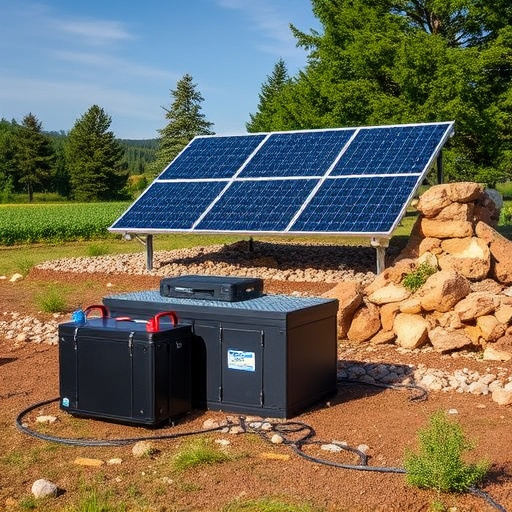
Off-grid solar power systems have gained popularity as a sustainable energy solution for remote locations or those seeking independence from traditional power grids. However, understanding the integral role of battery banks is crucial to harnessing the full potential of this renewable energy source. Solar power naturally generates electricity during daylight hours, but storing this energy for use at night or during periods of cloudy weather requires a well-designed battery system.
Battery banks act as the lifeblood of an off-grid solar setup, providing a means to capture and store excess solar energy produced during peak sunlight. These batteries are typically deep cycle lead-acid or lithium models, each with distinct advantages and considerations. Lead-acid batteries have been long-standing in this application due to their cost-effectiveness and proven reliability, while lithium batteries offer superior energy density, faster charging times, and longer lifespans. For instance, a 10 kW solar array paired with high-capacity lithium iron phosphate (LFP) batteries can power an average household for several days without sunlight.
The size and capacity of the battery bank directly impact the system’s performance and longevity. System designers must carefully calculate energy storage needs based on factors like daily energy consumption, climate, and available solar irradiation. A well-dimensioned battery bank ensures that essential appliances and lighting remain operational during extended periods of low or no sunlight. For example, a 20 kW-hour (kWh) battery system could power a typical home for 2-3 days without direct sunlight, providing valuable resilience in case of grid outages or cloudy weather events. Regular maintenance, including regular charging and monitoring, is essential to maximize battery life and performance, ensuring the off-grid solar system remains reliable and efficient over time.
Investing in Energy Storage: A Guide for Solar Power Users

Investing in energy storage is a strategic move for any solar power user looking to achieve true independence from the grid. Solar panels harness the power of the sun, but they require a reliable system to store excess energy for use during periods of low or no sunlight. This is where battery banks come into play as a crucial component of off-grid solar systems. By storing solar energy in batteries, homeowners and businesses can ensure a consistent power supply, even after the sun sets or on cloudy days.
The decision to invest in a battery bank should be based on a thorough understanding of your energy needs and the local climate. For instance, regions with high sunlight exposure and lower cloud cover throughout the year may require less storage capacity than areas known for frequent overcast days. A common rule of thumb is to store enough energy to cover 3-5 days of peak demand, but this can vary based on specific circumstances. Modern lithium-ion batteries offer a balance between cost, performance, and longevity, making them a popular choice among solar power adopters.
When selecting a battery bank, consider factors such as capacity (measured in kilowatt-hours), depth of discharge (DoD), and lifespan. High-quality batteries from reputable manufacturers can last for over a decade with proper maintenance. It’s also essential to pair your battery bank with a robust charging controller that optimizes energy flow from the solar panels, ensuring efficient and safe charging. By carefully considering these aspects, you’ll be well on your way to achieving sustainable energy independence through off-grid solar power.
Off-grid solar power systems are a viable solution for those seeking energy independence, but they require strategic investments in battery banks to store excess energy. This article has highlighted the critical role of batteries in ensuring a consistent power supply, especially during periods of low sunlight. By understanding the various types of batteries and their capabilities, homeowners and businesses can make informed decisions when selecting an off-grid solar setup. The key takeaways are clear: investing in quality battery banks is essential for reliable energy storage, enabling individuals to maximize the potential of solar power naturally and sustain themselves beyond grid limitations. This practical guide equips readers with the knowledge to navigate this aspect of renewable energy adoption effectively.